

Jesus Christ
Jesus of Nazareth stands as one of the most influential figures in human history. As the central figure of Christianity, he has shaped religious thought, ethics, politics, art, and culture for over two millennia. While theological claims about Jesus differ among religious traditions, historical scholarship employs critical methods to investigate his life, teachings, and legacy. This paper examines Jesus Christ from historical, religious, and socio-cultural perspectives, drawing on biblical texts, Second Temple Judaism, and modern scholarship.
Jesus was born in the early first century CE in Roman-occupied Judea, a region characterized by political tension, economic disparity, and messianic expectation. Jewish society was diverse, including groups such as the Pharisees, Sadducees, Essenes, and Zealots, each offering different responses to Roman rule and religious life (Sanders, 1993). The Hebrew Scriptures and apocalyptic literature shaped popular hopes for deliverance and divine intervention.
Historically grounded sources for Jesus’s existence include the canonical Gospels, the letters of Paul, and non-Christian references such as Josephus and Tacitus. Although written decades after his death, these sources allow historians to reconstruct certain elements of his ministry with reasonable confidence (Ehrman, 2012).

Jesus practice and connection to sacred fire
Most scholars agree that Jesus’s baptism by John the Baptist marks the beginning of his public life (Meier, 1991). John’s call for repentance and eschatological judgment influenced Jesus, who continued preaching the “kingdom of God,” a phrase central to his message. Jesus taught in parables, aphorisms, and symbolic actions. His teachings emphasized: Love of God and neighbor, Forgiveness and compassion, Reversal themes (e.g., “the last shall be first”), and The coming reign of God. He drew on Jewish law and prophetic tradition, yet challenged social norms and purity regulations. Scholars see him as a charismatic teacher, healer, and exorcist whose actions symbolized the arrival of God’s salvific presence (Borg, 1994).
The Gospels portray Jesus as a wonder-worker who healed the sick and performed exorcisms. While interpretations vary—from literal to metaphorical—historians note that miracle-working was common among charismatic Jewish figures of the time (Twelftree, 1999). Jesus explicitly connects himself to fire in several teachings. “I came to cast fire upon the earth” (Luke 12:49).
This statement has been interpreted as referring to the fire of divine judgment, the fire of the Holy Spirit, and the fire of transformative love. John the Baptist’s prophecy frames Jesus as the one who will baptize “with the Holy Spirit and with fire” (Matt. 3:11). Fire here symbolizes cleansing and empowerment, distinguishing Jesus’s ministry from John’s water baptism. The author of Hebrews describes God—revealed through Christ—as “a consuming fire” (Heb. 12:29), merging the Old Testament image of divine holiness with New Testament Christology. Taken together, these passages portray Jesus not only as teacher and savior, but as the bearer of divine fire—one who cleanses, renews, and transforms creation.
Many early Christian theologians read Jesus’s mission as the renewal of humanity through purifying fire. Origen, for example, interpreted divine fire as the transformative love of God that burns away sin. For him, Jesus’s teachings and sacrificial love illuminated human hearts, purifying them in a spiritual sense. Fire also symbolizes judgment. Jesus speaks of fire in eschatological contexts—such as the separation of good and evil (Matt. 13:40–42). However, Christian interpretation often distinguishes punitive fire from redemptive fire, the latter being associated with Christ’s mercy and the refiner’s fire of Malachi 3:2–3. Thus, Sacred Fire in Christian thought is not merely destructive; it is the force through which God sets things right.
The strongest New Testament connection between Jesus and Sacred Fire appears in the account of Pentecost (Acts 2:1–4), where the Holy Spirit descends upon the disciples in the form of tongues of fire. This event is directly linked to Jesus’s promise that the Spirit would come after his ascension (John 14:16–17; Acts 1:8). In this moment fire represents divine empowerment, the presence of Christ among believers, and the beginning of the Church’s mission. Christian tradition holds that the Spirit continues the work of Christ by “burning away” sin, igniting zeal, and illuminating truth. This fire is experienced internally—what mystics call the “inner flame” or “fire of divine love.” Writers such as Catherine of Siena, John of the Cross, and Hildegard of Bingen described their encounters with Christ in fiery imagery. For them, Jesus’s love was experienced as a flame that unites the soul with God, a purifying heat, and a consuming passion that transforms the believer.
John of the Cross’s “Living Flame of Love” is perhaps the most famous example, depicting the soul inflamed by God’s presence.
In Eastern Orthodoxy, the theme of divine fire appears in hesychast writings about the “Uncreated Light” and the “energies” of God. Jesus, the Incarnate Logos, is seen as the one who brings this divine fire to humanity so that they may be deified (theosis). In Christian theology, Sacred Fire encapsulates three interconnected dimensions of Jesus’s identity:
-
Christ the Revealer – The fire of divine presence made visible in human form.
-
Christ the Purifier – The fire that cleanses hearts and renews humanity.
-
Christ the Enabler – The origin of the Holy Spirit’s fiery empowerment in believers.
Sacred Fire, therefore, is not merely a symbol but a dynamic expression of Jesus’s action in the world. The Gospels portray Jesus as a wonder-worker who healed the sick and performed exorcisms. While interpretations vary—from literal to metaphorical—historians note that miracle-working was common among charismatic Jewish figures of the time (Twelftree, 1999).
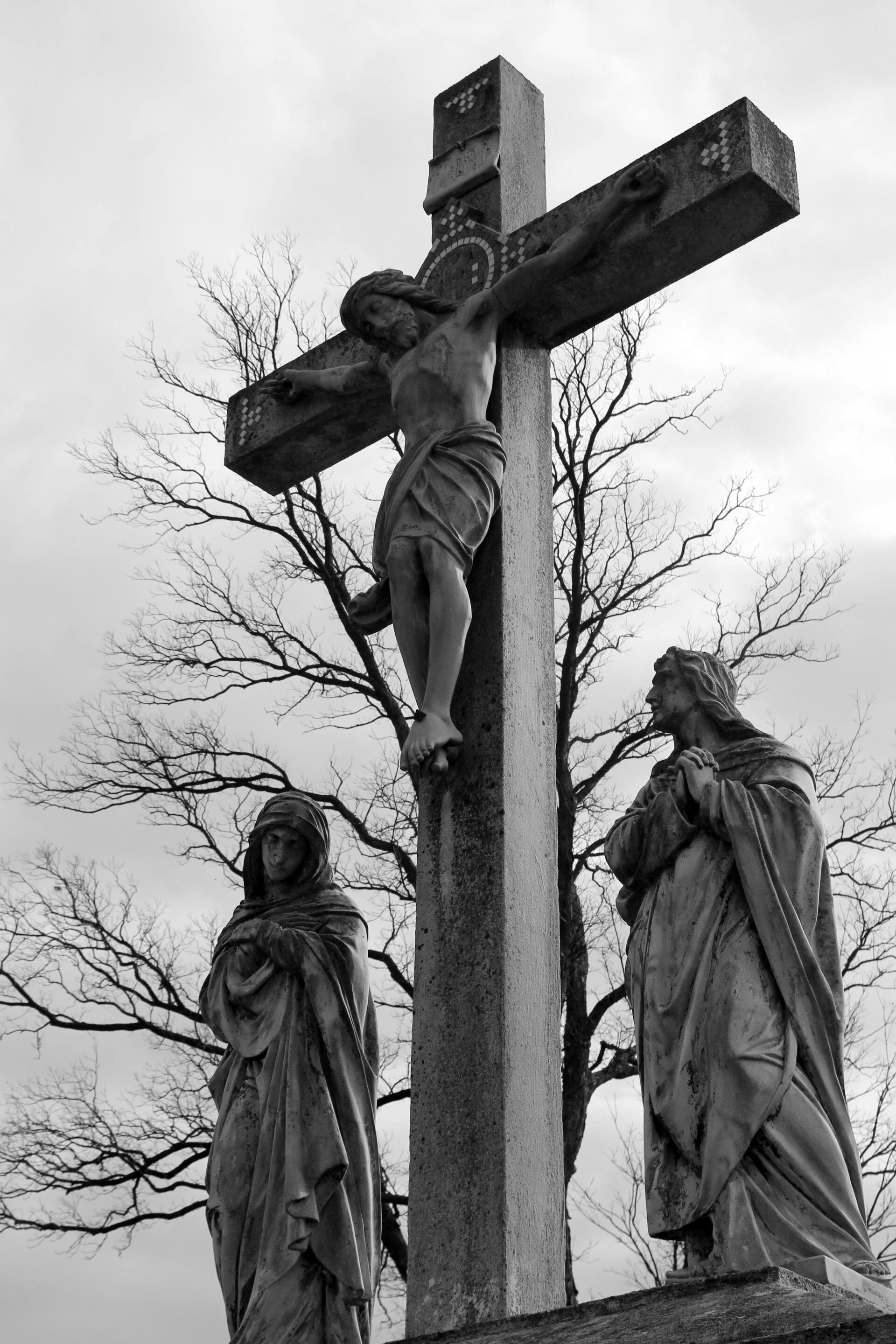
Jesus’s execution under Pontius Pilate is one of the most historically secure facts about his life (Sanders, 1993). Crucifixion was reserved for rebels and non-Roman criminals, suggesting that Roman authorities viewed him as politically threatening, possibly due to his popularity or perceived challenge to the established order. Theologically, early Christians interpreted his death as redemptive, drawing on Jewish sacrificial and prophetic traditions. Belief in Jesus’s resurrection catalyzed the rapid growth of the early Christian movement. Paul’s letters—written before the Gospels—attest that followers experienced appearances of the risen Jesus and believed he had been exalted by God (1 Corinthians 15:3–8). Scholars emphasize that these experiences, whether understood historically or theologically, were pivotal for transforming a failed prophetic movement into a worldwide religion (Wright, 2003).
In Western Christianity, the Paschal Fire lit at the Easter Vigil symbolizes Christ’s resurrection, the victory of light over darkness, and the spreading of divine fire through the world. The Paschal Candle, lit from this fire, represents the risen Christ. Churches celebrating Pentecost often incorporate red vestments, flames, or candles to symbolize the fiery descent of the Spirit promised by Jesus. These rituals serve as embodied expressions of theological truths. Jesus’s teachings influenced not only Christianity but also Islam, secular ethics, and global moral frameworks. Christian traditions understand him variously as Son of God, Messiah, prophet, or ethical exemplar. Beyond theology, his impact on art, literature, social reform, and human rights is profound. Modern scholarship continues to explore the “historical Jesus” versus the “Christ of faith,” recognizing the diversity of interpretations while acknowledging his unmatched cultural and spiritual significance.
The relationship between Jesus Christ and Sacred Fire is deeply woven into biblical imagery, Christian theology, mystical writing, and liturgical practice. Fire functions as a symbol of divine presence, judgment, transformation, and empowerment—qualities that Christians associate with the person and work of Jesus. Whether in the fiery language of the Gospels, the dramatic descent of the Spirit at Pentecost, or the burning hearts described by mystics, Sacred Fire reflects the Christian belief that Christ brings divine life to humanity. Understanding this symbolism enriches both theological reflection and spiritual practice, offering a lens through which the transformative mission of Jesus can be more deeply appreciated.
Reference
-
The Holy Bible: New Revised Standard Version.
-
Josephus, Flavius. Antiquities of the Jews.
-
Tacitus. Annals.
-
Borg, Marcus J. Meeting Jesus Again for the First Time. HarperCollins, 1994.
- Brown, Raymond E. An Introduction to the New Testament.
- Dunn, James D. G. Jesus and the Spirit.
-
Ehrman, Bart D. Did Jesus Exist? The Historical Argument for Jesus of Nazareth. HarperOne, 2012.
- John of the Cross. The Living Flame of Love.
-
Meier, John P. A Marginal Jew: Rethinking the Historical Jesus. 5 vols., Yale University Press, 1991–2016.
- Moltmann, Jürgen. The Spirit of Life.
- Origen. Homilies on Jeremiah and On First Principles.
-
Sanders, E. P. The Historical Figure of Jesus. Penguin, 1993.
-
Twelftree, Graham H. Jesus the Miracle Worker. InterVarsity Press, 1999.
-
Wright, N. T. The Resurrection of the Son of God. Fortress Press, 2003.
- Wright, N. T. Jesus and the Victory of God.