

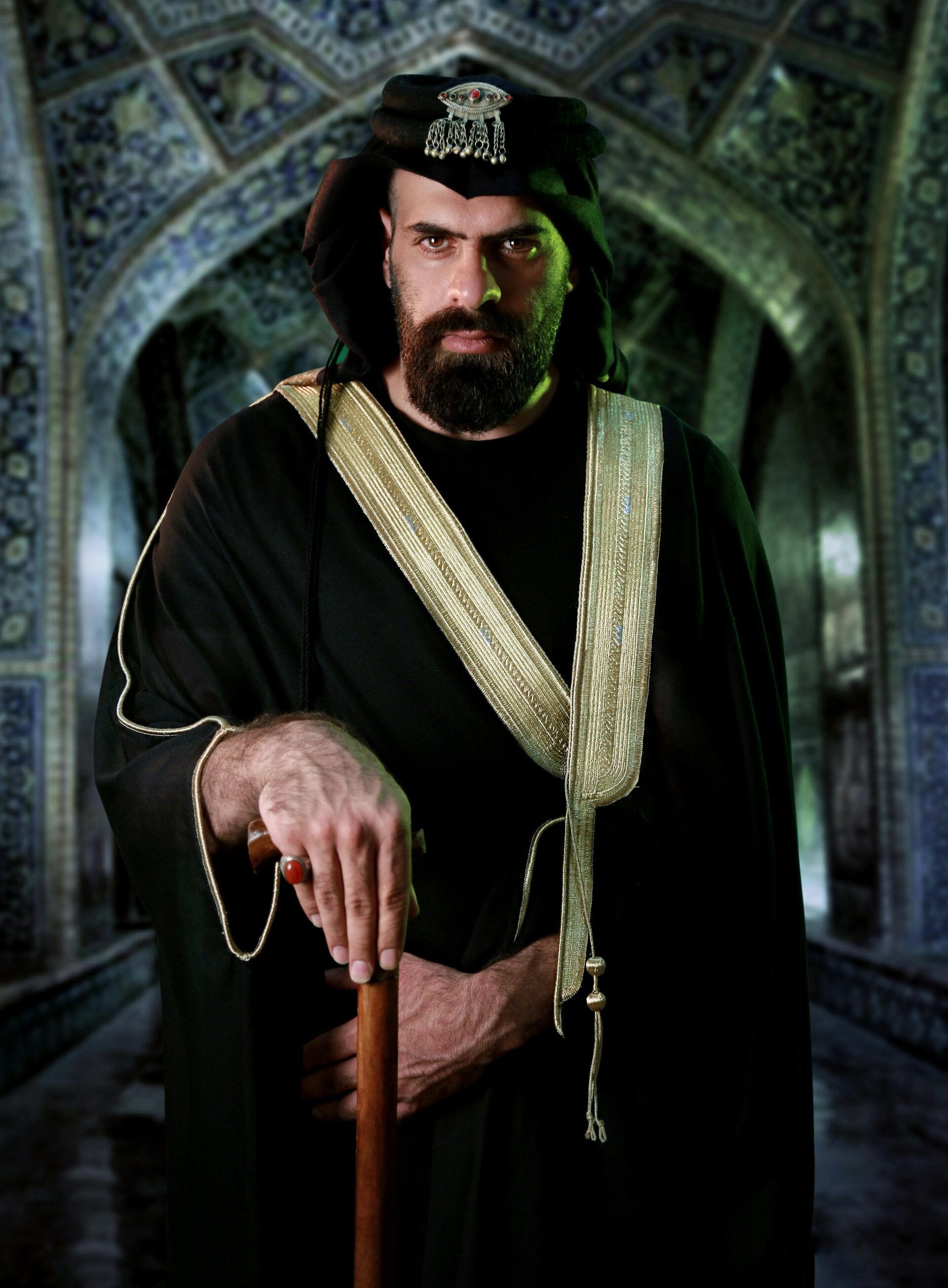
Magi Background
The “Magi” are most widely known in Western culture from the Gospel of Matthew, yet long before and after that account they were a historically attested priestly group within ancient Iranian society. Classical Greek and Roman authors, Achaemenid royal inscriptions, and later Middle Persian (Pahlavi) texts describe the Magi as ritual specialists associated with Persian religion—often linked to Zoroastrianism—who exercised influence in court politics, sacrifice, divination, and the interpretation of dreams. It argues that the Magi were not merely “magicians,” as later stereotypes suggest, but a hereditary priestly class central to the religious and political life of ancient Iran.
The earliest references to the Magi appear in Greek sources describing the Persian Empire. Herodotus, writing in the 5th century BCE, identifies the Magi as one of the six tribes of the Medes (Histories 1.101). According to his account, the Magi were responsible for religious rites and the interpretation of dreams. He presents them as a hereditary priestly caste who officiated sacrifices and recited sacred hymns during rituals. The Old Persian term maguš appears in Achaemenid inscriptions, notably the Behistun Inscription of Darius I. In that inscription, Darius describes a usurper named Gaumāta as “the Magus,” who falsely claimed the throne (DB I.61–63). This suggests that at least some Magi wielded significant political influence, and possibly that their priestly authority could intersect with royal legitimacy.
Scholars generally agree that the Magi originated among the Medes prior to the rise of the Persian Achaemenid dynasty. As the Persian Empire absorbed Median territories, Median elites—including priestly families—appear to have been integrated into imperial administration and ritual life. The relationship between the Magi and Zoroastrianism is complex and debated. Zoroastrianism, traditionally attributed to Zoroaster the Avestan, Zarathustra, was the dominant religious tradition of ancient Iran. Greek authors frequently describe the Magi as practitioners of a distinctively Persian religion centered on sacred fire, ritual purity, and reverence for cosmic dualism.
While the Achaemenid kings do not explicitly mention Zoroaster in their inscriptions, they invoke Ahura Mazda as supreme deity, consistent with Zoroastrian theology. By the Sasanian period (224–651 CE), Zoroastrianism had become closely tied to state identity, and the priesthood was highly organized. Later Middle Persian texts, such as the Dēnkard, present the Magi (Pahlavi: mōbed, “priest”) as authoritative guardians of orthodoxy. Some scholars argue that the Magi may have represented a Median priestly tradition that predated or evolved alongside early Zoroastrianism. Others contend that they became the formal priesthood of Zoroastrianism under imperial patronage. Regardless, by late antiquity, the Magi were synonymous with Zoroastrian religious authority in Iranian lands.
Greek and Roman authors provide valuable—if sometimes distorted—descriptions of Magian ritual practices. Herodotus describes them chanting hymns at sacrifices and performing elaborate rites without temples or statues. Later authors such as Strabo (Geography 15.3) note that the Magi tended sacred fires and offered libations accompanied by recitations from sacred texts.
Sacred fire was central to Persian religious life. Fire altars appear in Achaemenid iconography, and classical sources emphasize the Magi’s role in maintaining perpetual flames. Ritual purity laws—especially concerning corpses—were also prominent. The exposure of the dead (later known as “sky burial”) is mentioned by Herodotus as a distinctive Magian practice. In addition to sacrifice and fire ritual, the Magi were known for dream interpretation and divination. Greek authors often associated them with astrology and esoteric wisdom. Over time, the term “magus” in Greek (magos) came to mean a practitioner of magic more generally, reflecting both fascination and misunderstanding.
The Behistun account of Gaumāta demonstrates that at least one Magus claimed royal authority. Darius portrays him as an imposter, suggesting tension between priestly and royal power. Whether Gaumāta represented a broader Magian political movement remains debated, but the episode shows that Magi were not confined to ritual functions. Under the Achaemenids (c. 550–330 BCE), priests likely played key roles in legitimizing kingship through ritual. Royal inscriptions emphasize divine favor from Ahura Mazda, and priests would have mediated this relationship through ceremony. In later periods—particularly under the Sasanian Empire—the Zoroastrian priesthood became more formally institutionalized. High-ranking clergy such as Kartir (3rd century CE) wielded substantial influence, promoting religious orthodoxy and occasionally suppressing rival traditions. Although not always labeled explicitly as “Magi” in surviving texts, these priests represent the continuation of the Magian religious class in evolved form.
In Greco-Roman literature, the Magi became emblematic of Persian wisdom and exotic religious knowledge. Authors such as Pliny the Elder (Natural History 30.1–2) link them to astrology and occult practices, crediting them with the origins of “magic.” This association significantly shaped the later Western understanding of the term. However, these portrayals reflect both admiration and suspicion. To Greek observers, the Magi represented an ancient and learned priesthood, but also a foreign and potentially subversive tradition. Over centuries, the word “magic” itself derives from the Greek adaptation of magos, illustrating how the historical Magi were reinterpreted through cultural encounter.
By the Sasanian era, the priesthood had become hierarchically structured, with ranks such as mōbed and mōbedān mōbed (“chief of the chief priests”). Zoroastrian legal and theological texts from this period depict priests as custodians of ritual purity, law, and doctrinal teaching. Although Islamic conquest in the 7th century CE ended Zoroastrianism’s status as state religion, Zoroastrian communities preserved priestly lineages. In modern Zoroastrian communities in Iran and India (Parsis), hereditary priests maintain continuity with ancient Magian traditions, though transformed by centuries of historical development. In modern times, Zoroastrian communities are concentrated primarily in Iran, especially in cities such as Yazd and Kerman. India, particularly among the Parsis in Mumbai and Diaspora communities in North America, Europe, and Australia.
Zoroastrian priests are commonly known as mobeds and, in higher rank, dasturs. In Parsi communities, priesthood is typically hereditary and limited to males born into priestly families, reflecting ancient patterns of lineage-based religious authority.
Modern Zoroastrian priests perform fire temple rituals, initiation ceremonies (navjote), marriage and funeral rites, recitation of Avestan scriptures, and instruction in doctrine and ritual purity laws. The centrality of sacred fire—a key element in ancient Magian religion—remains foundational. Fire temples such as the Iranshah Atash Behram in India preserve ritual traditions that scholars trace back to late antique Iran.
Outside Zoroastrian communities, the word “magus” has taken on a distinct and often unrelated meaning. In Western esoteric traditions, “magus” refers to an initiate or master of occult knowledge. This reinterpretation stems largely from Greco-Roman misunderstandings of Persian priests. In the 19th and 20th centuries, occult groups adopted the term to denote high-ranking adepts. For example, The Hermetic Order of the Golden Dawn (founded in 1888) used hierarchical grades inspired partly by classical antiquity. Thelema, founded by Aleister Crowley, employed the title “Magus” as a specific spiritual attainment within its initiatory system. They represent a Western esoteric reinterpretation of the term, shaped by Renaissance and Enlightenment fascination with “Oriental wisdom.”
References
- Boyce, Mary. A History of Zoroastrianism. 3 vols. Leiden: Brill, 1975–1991.
-
Briant, Pierre. From Cyrus to Alexander: A History of the Persian Empire. Winona Lake, IN: Eisenbrauns, 2002.
- Christopher I. Lehrich, The Language of Demons and Angels (2003)
- Darius I. Behistun Inscription. Old Persian text and English translation in R. G. Kent, Old Persian: Grammar, Texts, Lexicon. New Haven: American Oriental Society, 1953.
-
Duchesne-Guillemin, Jacques. Religion of Ancient Iran. Bombay: Tata Press, 1973.
- Herodotus. Histories. Translated by Aubrey de Sélincourt. London: Penguin Classics, 1954.
- Lehrich, Christopher I. The Language of Demons and Angels. 2003.
- Pliny the Elder. Natural History, Book 30.
- Rose, Jenny. Zoroastrianism: An Introduction. 2011.
- Strabo. Geography, Book 15.
- The Avesta. Translations by various scholars.
-
Wiesehöfer, Josef. Ancient Persia. London: I.B. Tauris, 1996.