

Astrology
Astrology is a symbolic system that interprets correlations between celestial movements and human experience. Practiced in various forms for over two millennia, astrology has appeared in Mesopotamian omen literature, Hellenistic philosophical systems, Islamic scientific scholarship, and Renaissance esotericism. Today, it survives primarily as a symbolic and psychological framework rather than an empirical science. Astrology began as celestial omen interpretation in ancient Mesopotamia (second millennium BCE). The compendium Enuma Anu Enlil catalogued planetary and lunar phenomena alongside predicted political outcomes. These early systems were collective and mundane (state-focused), not individual. What we now recognize as natal astrology emerged in the Hellenistic world (ca. 2nd century BCE–2nd century CE), blending Babylonian astronomy with Greek philosophy.
One of the most influential texts is the Tetrabiblos by Claudius Ptolemy. In this work, Ptolemy systematized astrology into a natural philosophy grounded in elemental theory and planetary qualities. Hellenistic astrology introduced key concepts still used today:
-
The zodiac (12 signs of 30° each)
-
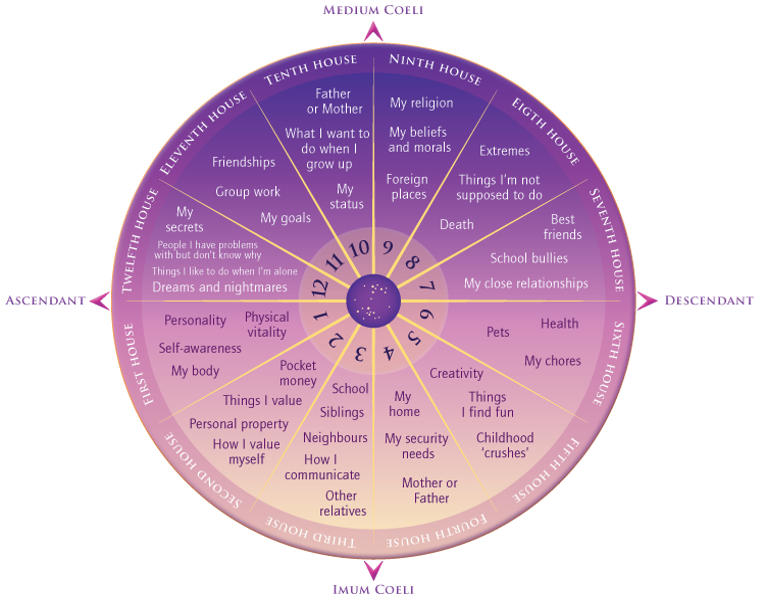
The twelve houses
-
Planetary rulerships
-
Aspects (angular relationships between planets)
Astrology flourished in the medieval Islamic world, where scholars preserved and expanded Greek works. Figures such as Abu Ma'shar integrated Aristotelian cosmology with astrological doctrine. Through translation movements in Spain and Sicily, astrology re-entered Europe, influencing thinkers like Marsilio Ficino. During the Renaissance, astrology was considered part of the quadrivium and practiced alongside astronomy. In the 20th century, astrology shifted toward psychological interpretation, influenced by depth psychology. Though Carl Jung did not practice astrology as a predictive science, he viewed it as a symbolic system expressing archetypal patterns and synchronicity. Contemporary astrology often emphasizes personality analysis and self-reflection rather than deterministic fate.
Core Components of Astrology
Astrology is based on a geocentric symbolic model (Earth-centered perspective). A natal chart is a snapshot of the sky at the moment and place of birth.
1. The Zodiac Signs
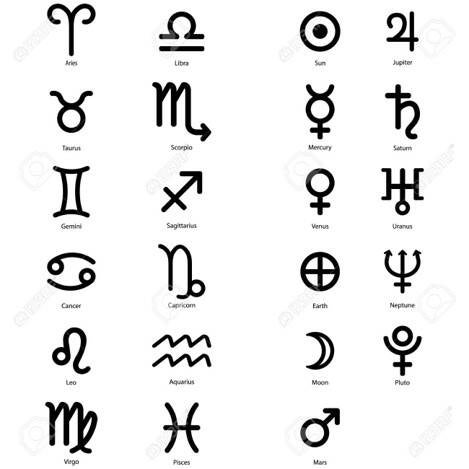
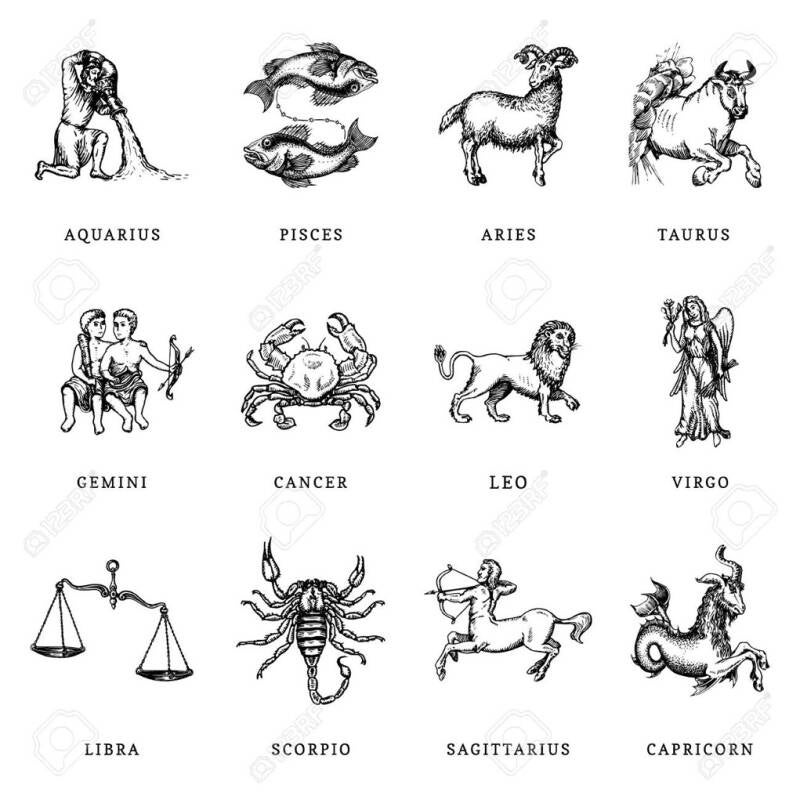
The zodiac is a 360° belt divided into 12 signs:
Aries, Taurus, Gemini, Cancer, Leo, Virgo, Libra, Scorpio, Sagittarius, Capricorn, Aquarius, Pisces.
Each sign is associated with:
-
An element (Fire, Earth, Air, Water)
-
A modality (Cardinal, Fixed, Mutable)
-
A planetary ruler
For example:
-
Aries: Fire, Cardinal, ruled by Mars
-
Taurus: Earth, Fixed, ruled by Venus
2. The Planets
In traditional astrology, the primary planets include:
-
Sun
-
Moon
-
Mercury
-
Venus
-
Mars
-
Jupiter
-
Saturn
Modern astrology also incorporates Uranus, Neptune, and Pluto.
Each planet symbolizes a psychological or functional principle:
-
Sun: Confident, bold, fierce, tell you what they know, vitality, what you conciously strive towards, makes for a beautiful lifestyle when living
-
Moon: Silver changes color, only plane that changes, emotions, comfort, motherly, kind, very domestic, like being at home, very casual, swayed by emotions, very psychich dingy, moves quick, have to differentiate people quickly, more like have oppression, can navigate astral through feeling, empath
-
Mercury: Lower mind, communication, how everything aspects, very feeling person, must know for retrigrade, mercury is daily use of technology, what we hate as society, fast paced talking, continues to shut down
-
Venus: Goddess of love, sexual love, celestrial love, represents community, how you relate to people, how we work together, financial aspect, fertility aspect, tell how someone relates to other people, can use for compatability
-
Mars: Underestimated, war, competative, does not have to answer to anyone else unless someone makes them, sexual desires matter, bad justification, Toxic masculinity, positive, use to get out of depression, action, personal fight out of manipulation, how service from abuse
-
Jupiter: expansion, belief
-
Saturn: Trial, tribulation, karma, rough, where your structure source, navigate, 3D paradigm, where ever it is, you have the ability to change, always promise to people slow change on this. Promise can build however you build it. Secret gift, joint pain, Neptune alchemizes higher aspect of Saturn.
- Uranus:
- Pluto: Hades, lots of power and wealth, underground, wants to have wealth to be big and tell people what to do. Power hungry, greater good in negative light, Someone takes fall for everyone. Part of animalistic brain, instinctual, taboo sexuality, pressure to become something, tortured souls, inflict own power on the world,
3. The Houses
The twelve houses divide the sky into areas of life experience. Their meanings developed in Hellenistic astrology and were refined over centuries.
1st House – Self and identity
2nd House - Assets and Values, Items owned as a child, toys, grew up with
3rd House - Mind and Learning, communicate, traveling around town, short travel
4th House - Security, home and family life
5th House -Love, Fun, Humor, childhood friendship, dating and early sexuality
6th House - Daily Life, routines, stillness
7th House - Relationships in partnerships, business
8th House - Power, sex, drugs, rock and roll, fall out, stress, taboos, shadow side, taboo sexuality
9th House - Spirituality and Religion, growth learning, teaching, college, distant travels
10th House - Relationship to commitments, status, Authority, and Reputation, career and reputation
11th House - Socializing, networking, and connecting, dreams and goals
12th House - Spiritual leanings and natural connection to the universe, where you die and where you begin, dream and psychic
House placement shows where planetary energies manifest.
4. Angular Houses
House 1: Ascendant - who you meet people as
House 4: IC Who you are at home/comfort
House 7: Descendant - Who you invest in, partnership, marriage
House 10: MC - public self, how you are seen
House 1, 4, 7, 10: Postive aspects
House 3, 6, 9, 12: Negative aspects
House 4, 8, and 12: Psychic houses
House Quadrant- Cycle
House 1, 2, and 3: You as a person
House 4, 5, and 6: You in family
House 7, 8, and 9: You as an adult, outside of family
House 10, 11, and 12: How people see you, mass consciousness, oneness
5. Aspects
Aspects are angular relationships between planets. Major aspects include:
-
Conjunction (0°)
-
Sextile (60°)
-
Square (90°)
-
Trine (120°)
-
Opposition (180°)
These indicate harmony, tension, integration, or polarity between planetary functions.
6. How to Read a Natal Chart: Step-by-Step
Step a: Determine the Big Three
The foundational triad includes:
-
Sun sign (core identity)
-
Moon sign (emotional nature)
-
Ascendant (rising sign, outer style and life orientation)
The Ascendant is calculated based on precise birth time and location.
Step b: Examine Chart Ruler
The chart ruler is the planet ruling the Ascendant sign. Its placement (sign and house) shows overarching life themes.
For example:
If the Ascendant is Scorpio, Mars (traditional ruler) becomes especially significant.
Step c: Analyze Planetary Placements
For each planet, interpret:
Planet + Sign + House
Example structure:
Mars in Leo in the 10th house = Assertive (Mars) expression in a dramatic or visible way (Leo) in career/public life (10th).
Step d: Evaluate Aspects
Look for:
-
Tight conjunctions (strong emphasis)
-
Hard aspects (squares, oppositions) indicating tension
-
Trines and sextiles indicating ease or talent
Patterns such as T-squares or grand trines add interpretive depth.
Step e: Synthesize, Don’t Fragment
Astrology is holistic. Avoid reading placements in isolation. Meaning emerges through synthesis—how the chart functions as an integrated symbolic system.
Core Techniques for Reading External Events
Type of External Events
- TypeFocusMundaneNations
- Global events
- PoliticalElections
- Leadership
- Financial Markets
- Economic cycles
- WeatherSeasonal predictions
- Question-based event timing
1. Planetary Cycles (Macro-Level Timing)
Large-scale events are often interpreted through major planetary cycles.
A. Jupiter–Saturn Conjunction (≈20 years)
Historically associated with:
-
Political transitions
-
Ideological realignments
-
Economic restructuring
The December 2020 conjunction marked a transition from Earth signs to Air signs, symbolically interpreted by some astrologers as a shift toward information economies and digital infrastructure.
B. Saturn–Pluto Cycles
Often associated with:
-
Structural collapse
-
Authoritarian consolidation
-
Institutional crisis
The January 2020 Saturn–Pluto conjunction coincided with the outbreak of global COVID-19 lockdowns. Mundane astrologers noted themes of restriction (Saturn) and systemic transformation (Pluto).
2. Eclipses
In classical astrology, eclipses are among the most powerful predictors of collective events.
According to Tetrabiblos, eclipses:
-
Affect regions where they are visible
-
Influence events for months or years depending on duration and angularity
To interpret:
-
Determine where the eclipse is visible.
-
Cast a chart for the eclipse location.
-
Examine which houses are activated.
-
Note aspects to national charts (if used).
3. Ingress Charts
An ingress occurs when the Sun enters Aries (Aries Ingress chart). Traditionally used for yearly forecasts.
Steps:
-
Cast a chart for the exact moment the Sun enters 0° Aries.
-
Use the capital city of the nation in question.
-
Examine:
-
Ascendant ruler (condition of leadership)
-
10th house (government)
-
2nd house (economy)
-
6th house (public health)
-
This technique was widely practiced in medieval Europe.
4. National Charts
Astrologers often use founding charts for nations. For example:
-
United States – commonly July 4, 1776 (Sibly chart version widely used)
External events are analyzed through:
-
Transits to the natal chart
-
Progressions
-
Solar returns
Example:
Transiting Pluto opposing a nation’s natal Sun is interpreted as a crisis of identity or power transformation.
5. Outer Planet Transits
Modern mundane astrology places strong emphasis on:
-
Uranus (revolution, disruption)
-
Neptune (ideology, confusion, mass psychology)
-
Pluto (power, transformation, systemic change)
These planets move slowly, correlating with generational and structural developments.
Step-by-Step: How to Analyze an External Event
Let’s say you want to analyze a major election or financial crash.
Step 1: Identify the Exact Time
Astrology requires precise timing:
-
Declaration of independence
-
Election result announcement
-
Market opening bell
-
Treaty signing
Without an exact time, interpretation weakens.
Step 2: Cast the Event Chart
Use:
-
Date
-
Exact time
-
Location
Analyze:
-
Ascendant (nature of event)
-
Midheaven (public outcome)
-
Moon (public mood)
Step 3: Check Planetary Condition
Evaluate:
-
Dignity (is the planet strong or weakened?)
-
Retrogradation
-
Hard aspects (squares, oppositions)
-
Conjunctions with outer planets
Step 4: Examine Larger Cycles
Place the event within broader context:
-
Is it near a major conjunction?
-
Is it occurring during eclipse season?
-
Is Saturn changing signs?
Events rarely occur in isolation; they cluster around major cycles.
Step 5: Correlate, Don’t Assert Causation
Historically, astrologers framed planetary movements as symbolic indicators, not mechanistic causes. Even Ptolemy argued astrology operated through natural qualities, not divine determinism. Modern scholarship treats astrology as a symbolic interpretive system rather than a scientific predictive model.
Nothing is guaranteed yet history has proven that celestial alignment effects outcomes.
References:
- Abū Maʿshar. The Great Introduction to the Science of the Judgments of the Stars. Translated by Keiji Yamamoto and Charles Burnett, Brill, 2019.
- Campion, Nicholas. A History of Western Astrology. 2 vols., Continuum, 2008–2009.
- Firmicus Maternus. Matheseos Libri VIII (Mathesis). Translated by Jean Rhys Bram, Noyes Press, 1975.
- Houlding, Deborah. The Houses: Temples of the Sky. The Wessex Astrologer, 1996.
- Jung, C. G. Synchronicity: An Acausal Connecting Principle. Translated by R. F. C. Hull, Princeton UP, 1960.
- National Research Council. Astrology and Astronomy: A Study of the Evidence. National Academy of Sciences, 1980.
- Ptolemy. Tetrabiblos. Translated by F. E. Robbins, Harvard UP, 1940.
- Tester, S. J. A History of Western Astrology. Boydell Press, 1987.