

Hecate's Torch Part 1: Fire of Leviathan
Oh, ancient one, gateway and key to the deep and guardian of the depths of the abyss in the ocean. Principalities of air, water, fire, and earth. We give thanks to your teaching and wisdom on your essence and purpose.
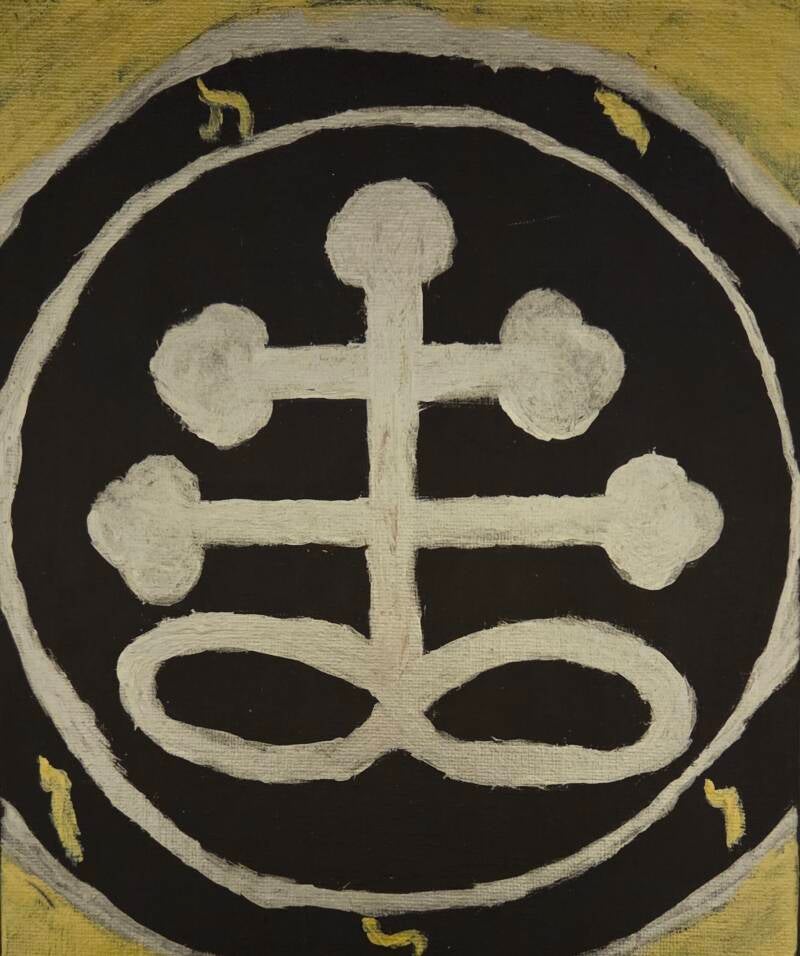
Leviathan: The Serpent of the Deep
Origins in Ancient Texts
The earliest known references to Leviathan come from the Hebrew Bible, particularly in the books of Job (41), Psalms (74:14; 104:26), and Isaiah (27:1).
- In Job 41, Leviathan is described as an enormous sea creature, fierce and unconquerable: “Can you pull in Leviathan with a fishhook?” The passage emphasizes human impotence before divine creation and the uncontrollable forces of nature.
- In Psalms, Leviathan is depicted as a beast subdued by God, symbolizing divine supremacy over chaos.
- Isaiah transforms Leviathan into a metaphor for evil nations or cosmic forces destined for ultimate destruction.
Archaeological and comparative studies link Leviathan to Ugaritic mythology, particularly the chaos dragon Lotan, defeated by the storm-god Baal. This reflects a widespread ancient Near Eastern motif: the Chaoskampf, or "struggle against chaos," where a deity battles a monstrous embodiment of primal disorder. Leviathan thus joins a lineage of ancient sea monsters like Tiamat in Babylonian myth and Jörmungandr in Norse legend. In Jewish mysticism, particularly within the Talmud and Midrash, Leviathan takes on new symbolic dimensions. Some texts imagine it as a giant fish created on the fifth day, to be slain and served as a meal for the righteous in the world to come (Bava Batra 74b). Mystical traditions—especially in the Zohar—sometimes interpret Leviathan as the embodiment of unrestrained desire and chaotic energy that must be contained by divine order.
Early Christian theologians like St. Augustine and Thomas Aquinas reinterpreted Leviathan allegorically, often equating it with Satan, representing sin and the forces of pride, envy, and rebellion against God. It came to symbolize spiritual warfare: the struggle between divine light and the darkness of chaos. Medieval art frequently depicted Leviathan as the mouth of Hell itself. In modern times, the most famous reinvention of Leviathan appears in Thomas Hobbes’ political philosophy. In his seminal 1651 work Leviathan, or The Matter, Forme and Power of a Common-Wealth Ecclesiasticall and Civil, Hobbes used the creature metaphorically to describe the sovereign state. The Leviathan represents political order and authority—a powerful “artificial man” formed by the collective will of individuals to escape the chaos of the state of nature. Here, the monster is not evil but necessary; it embodies security and governance rather than destructive chaos.
Leviathan’s imagery persists across diverse cultural forms:
- Literature: Authors such as Herman Melville (Moby Dick) and Thomas Pynchon (Gravity’s Rainbow) invoke Leviathan as a symbol of vast, unknowable power.
- Popular Culture: The creature appears in films, video games, and fantasy literature as both literal monster and metaphor for political or environmental peril.
- Philosophy and Social Theory: Modern thinkers—like Carl Schmitt and Gilles Deleuze—revisit Hobbes’ Leviathan to explore the relationship between power, sovereignty, and individual freedom.
Across traditions, Leviathan symbolizes the tension between order and chaos, divine authority and human frailty, freedom and control. Its enduring appeal lies in its dual nature: at once creature and concept, terror and necessity. Each retelling remakes Leviathan in the image of its age—whether as mythic beast, demonic adversary, or emblem of political order.
Channeled workings in relation to Hecate's Fire and The Qliphoth
“The riddle of me is the true primal nature of the dragons. First and foremost, the advent that we are diabolical creatures. Sure, we have an appetite for flesh as all creatures do. Yet because of our fierce nature, we are beheld as monsters amongst the Gods. In the beginning we were given powers over elements to help create the world you see. This relationship allowed us to fly, swim and launch fire with our breath. These workings with elements are what we are represented in the east. Protectors of rivers, lakes, caves, and the depths. It is beholden that you see us this way and not the monstrous representation given in the west. The secret is shown in ouroboros biting his tail. Within the protected space lies the foundation of creation.
You see me as a sea serpent as that is what was said. Yet I have been in water, earth, and sky. Carrying the torch of its creation. The true nature of the dragon is to be at peace with the self. Yet fierce and wielding chaos to protect, defend, and bolster the creation. The dragons lost trust with your kind ages ago. Yet the true seeker can gain our trust. You Vovin, can carry our spark, that connects our gnosis and wisdom. It will not require sacrifice yet work on all levels. Dragons are guardians of each of the gates of the Kingdom of Night and represent primordial forces existing that make up the Qlipoth. I am a shapeshifter and have many times approached those that seek me as a man or woman as I am androgynous. Through my mouth is a gateway to hidden places of treasures as I am seen as the blind serpent that enters the sphere of Nehamoth/Lilith. It is for this reason my fire is a key to Nehamoth. As I am a protector of those of the deep, call to me to encircle your space and keep.”

Praxis
Purpose: The purpose of this rite is to invoke the fires of Leviathan to gain his/her gnosis. Leviathans fire is one of the keys of Hecate's to the Kingdom of Night/Qliphoth.
Tools:
Two black tealight/candle
Lancet to anoint the sigil
The Sigil of Hecate (Created by Asenath Mason) and The Sigil of Leviathan. It is recommended to draw them on paper or paint them on canvas. Doing so allows your energy to flow into its creation.
Dagger-(Only used for creating the ritual container) Do not use your dagger in the invocations of any of the dragons. How you approach them is how they will approach you and with a dagger can create complications.
Journal
The Invocation
Day 1.
Ritual Prep:
Set up the sigils on an and alter/table facing west and a black tealight next to it. Take a salt shower/bath or ritual bath prior to the invocation. It prepares the mind, body, and spirit for the ritual.
Ritual:
Creating the ritualistic container: Starting in the west and ending in the west making, using a dagger, I would walk counterclockwise drawing the circle. As I walked, I said these words. “I cast this circle of Leviathan around, entwined and bound, above and below to protect the energies so.” Finish by drawing a flaming trident to seal the space.
Light the candle and anoint the sigils with your blood.
Partial Invocation to Hecate:
Great Queen of the Night
Keeper of the Keys
Torch Bearing Goddess
Lady of the Crossroads
Heaven, Earth, and Sea
Great Goddess Hecate
Open the gates to the underworld
To the realm of Nehamoth
I partially invoke you from waist to crown
Enter my temple of flesh
Awaken your fire and gnosis within me
Guide me to the guardian of its gate
So I may learn of your key
to the fire of Leviathan
Ho Dracon Ho Megas
En Nomine Draconis
Meditation:
Focus on the sigil for a few minutes. When you have the sigil memorized, close your eyes. See the sigil rise out of the grown in gold and silver with flames wrapping around the edges. See the sigil morph and return to its shape and open. Begin chanting Vovin three times and then Hecate three times. Keep chanting until you feel the energy shift.
After you say the words, sit or lay down and see what comes to you.
Closing:
Call to Hekate/Hecate to guide you back home. See if she has any messages for you.
Once back, say: "It is done"
Leave the candle vigil in honor of Hecate
Cast the sigil of fiery trident in reverse to open the space.
Day 2.
Ritual Prep:
Set up the sigils on an and alter/table facing west and a black tealight next to it. Take a salt shower/bath or ritual bath prior to the invocation. It prepares the mind, body, and spirit for the ritual.
Creating the ritualistic container: Starting in the west and ending in the west making, using a dagger, I would walk counterclockwise drawing the circle. As I walked, I said these words. “I cast this circle of Leviathan around, entwined and bound, above and below to protect the energies so.” Finish by drawing a flaming trident to seal the space.
Ritual:
Light the candle and anoint the sigils with your blood.
Invocation to Leviathan:
Great Dragon Leviathan
I call to the Serpent of the Seas
Protector of the depths
Guardian of hidden places
Protector of all in the depths
Great Serpent of eternity
The great dragon that keeps the world together in its coiled embrace
Guardian and opener of the gates of night
I call thee this night
Great Dragon Leviathan
Awaken within me your key to the depths and to the tree of night
To the realm of Nehemoth
Great Dragon Leviathan, awaken within me your gnosis of guardianship of the depths
So that I may respect all those I meet
Great Dragon Leviathan I Invoke thee
Enter my temple of flesh
Awaken your fire and gnosis within me so I may wield
Its flame in protections name.
Great Dragon Leviathan as you are in service to me, I am in service to you
Ho Dracon! Ho Megas!
Meditation:
After you say the words, sit down. Focus on the sigil for a few minutes. When you have the sigil memorized, close your eyes. See the sigil rise out of the grown in gold and silver with flames wrapping around the edges. See the sigil morph and return to its shape and open. Begin chanting Vovin three times and then Leviathan three times. Keep chanting until you feel the energies shift. If accepted Leviathan will request you to sit with your left hand up and your right hand down. As you do, feel energy pouring into your body through your left hand and out your right. Turn you right hand up. With both hands facing upward, feel energy rising from both. The transference was complete. Allow any experience to unfold.
If Naamah appears, do not be alarmed, she is the ruler of Nehamoth. Give thanks for the meeting and state your "intention of learning Leviathans fire. This is not a initiation into the Qliphoth, an introduction to its gates." Let any experience unfold.
Inner Temple Meditation:
See before you a black door with a silver handle. You have seen this door before, it is to your temple door. Open the door and step in. The torch light flickers on the wall as you see your table, chair and mirror. In the center of the room you see your source flame burning bright.. Walk toward it and take a log and place it on the flames. As you do this, the torches on the walls flare up and back down. Turn to the left corner of the room. You see stairs going down into the ground. Next to the stairs is a doorway to another room. Walk into the room. Small torches line the wall. Looking at them, each torch has a frame of a dragon. The light in the room is coming from a fire pit in the middle of the room. You see logs next to the fire. Take one and say the name Leviathan and place it on the fire. This action causes one of the torches to ignite. If Leviathan appears, allow the experience to unfold.
Come back here to care for the flame by adding logs to it. You will find the more you do, the more you sense your own energy as well as Leviathans. Know from this day Leviathan walks with you
Closing:
Call to Hekate/Hecate to guide you back home. See if she has any messages for you.
Once back, say: "It is done"
Leave the candle vigil in honor of Leviathan
Cast the sigil of fiery trident in reverse to open the space.
Recommended Resources
Primary Texts
- Auerbach, Erich. Figura. Scenes from the Drama of European Literature, 1959.
- Britannica Online: “Leviathan” entry.
- Day, John. God’s Conflict with the Dragon and the Sea: Echoes of a Canaanite Myth in the Old Testament. Cambridge University Press, 1985.
- Fishbane, Michael. Biblical Myth and Rabbinic Mythmaking. Oxford University Press, 2003.
- Hobbes, Thomas. Leviathan: or The Matter, Forme and Power of a Common-Wealth Ecclesiasticall and Civil. 1651.
- Oxford Reference: “Leviathan (Biblical creature and Hobbesian symbol).”
- Schmitt, Carl. The Leviathan in the State Theory of Thomas Hobbes: Meaning and Failure of a Political Symbol. University of Chicago Press, 1996.
- Stanford Encyclopedia of Philosophy: “Thomas Hobbes.”
- The Hebrew Bible (Book of Job 41; Psalms 74, 104; Isaiah 27)
- The Jewish Encyclopedia: “Leviathan” article.
- Wyatt, Nicolas. Religious Texts from Ugarit: The Words of Ilimilku and his Colleagues. Sheffield Academic Press, 1998.
- Ugaritic Baal Cycle (for the Lotan parallel)