

Torch of Hecate/Hekate Phosphorus Part 8: Fire of Nahar
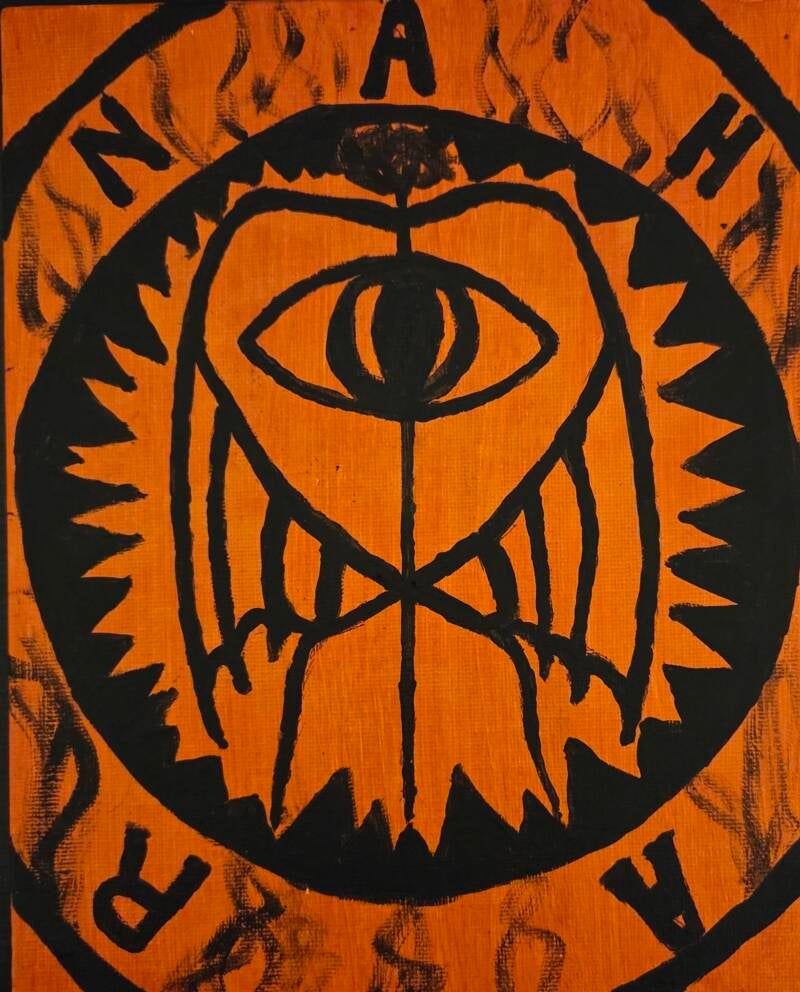
What happens in the abyss ripples through eternity." - Nahar
Background
The name Nahar appears across several mythic and linguistic traditions, especially in ancient Near Eastern religion, where it is closely linked to the sea, rivers, and cosmic forces. Rather than being a standalone dragon figure with independent adventures like Fafnir in Norse myth, Nahar is typically an epithet or aspect of other sea-related divinities. Most notably the Canaanite Yam and in some later accounts becomes associated with serpentine, dragon-like chaos. In the ancient Ugaritic Baal Cycle, texts discovered at Ugarit in modern-day Syria, the sea god Yam — whose name literally means “sea” — is a major divine force. His epithets include ṯpṭ nhr, which is generally translated as “Judge of the River” or “Ruler River” — nhr corresponds to “river” and is linguistically related to “nahar.”
Some scholars suggest Nahar might originally have been an independent water deity or title that became fused with Yam’s identity over time. In various sources, Yam is also translated as Yam-Nahar, emphasizing his connection to both the sea and river waters. Though ancient texts do not always describe Yam literally as a dragon, later interpretations and mythographic traditions associate him with dragon imagery. In some Middle Eastern myth summaries, Yam-Nahar is depicted as a sea serpent with multiple heads, a motif reminiscent of other Near Eastern chaos figures. This connection appears most clearly in secondary myth collections that associate Yam-Nahar with multi-headed hydra-like forms. The Ugaritic Baal Cycle portrays a cosmic conflict between Yam (of the waters) and Baal (storm god). In this chaoskampf narrative, the sea deity battles against divine order and is eventually defeated, symbolizing the regulation of destructive natural forces.
Scholars have linked these stories to later dragon-slaying themes in Near Eastern and even biblical literature with associations between sea monsters like the Leviathan and earlier chaos figures. Thus, Nahar as part of Yam-Nahar became entangled with imagery of primordial water chaos — sometimes interpreted as dragon-like forces — but the actual ancient texts emphasize his role as a powerful deity of rivers and seas rather than a fully developed dragon character. While Nahar itself does not appear as a named independent dragon hero or villain in surviving ancient myth texts, the title “Nahar” resonates through Ugaritic religious literature as part of the sea god Yam’s epithets. Later mythographic sources that associate Yam-Nahar with multiform serpent or dragon imagery. As well as comparative myth studies, where water chaos monsters reflect universal themes of nature vs. order.
These layered traditions have ensured that Nahar — even as a term — remains linked with some of the oldest dragon-associated concepts in myth: the unruly waters and the serpentine forms that symbolize them. Nahar is best understood not as a standalone dragon figure with an independent myth cycle, but as a component of ancient Near Eastern water deity lore, especially tied to the sea god Yam’s identity and titles such as “Judge of the River.” Over time this association contributed to broader mythic imagery of serpentine, dragon-like forces of chaos, especially in contexts where water, storm, and order are in opposition.
Nahar Channel and Meditation
“I have been known as a destroyer of worlds, conqueror of souls, and devourer of spirits. These titles are all true and false. My primordial force is one of destruction, yet it is the destruction of the image of self you choose not to share with the world. Those that do not pass the test of Choronzon, and Belial, crossing the sphere of Daath/Abysss, will be swallowed by my force. What is reborn is molded by the forces you failed to. The destruction can be devastating for those not prepared. For those who pass the tests, still get devoured but choose how to be reborn. Rights to travel above and below the abyss without any issues are given. Devouring is a vampiric act which once learned, will enable you to shift to a negative polarity. This is part my teaching as well.
Choronzon will test your spirit and its abilities to balance energies. Many do not pass and lose their mental faculties in the process. People go crazy and do crazy things after. Why it is good to go through the lower spheres first to build foundation. This is part of your gnosis and why I am explaining it this way. I am feminine in nature because the rebirth in the abyss is partially from my womb. Yet the integration comes from crossing, facing the challenges, and sacrificing what does not serve. The sacrifice then is given to me to transmute it into the aspect that does serve. This act proves whether you are ready for self deification/actualization/individuation. Some that come are not prepared or are not true to their nature and the outcome is confusion or worse following their untruths. Like Tiamat’s heart, mine is the fires of destruction that consumes all. Know this when we are done, you will be ready for a full walk through the tree of night.
When I was younger in the void, I had little purpose, yet Mother Tiamat entrusted me to give life from death. Through destruction, pieces of the self would gather and need to be recycled. These are the pieces that spirit gave up entirely. If not for my work, all aspects of reality would pile high to the tops of the abyss. For Daath aligns with the heart chakra. Although mother Tiamat’s heart resides in the sacral, the abyss resides in the heart which is why when heartbreak happens, you feel like you are in hell. A piece of you falls into the abyss devoured by me and disbursed into the tree of night. This is how the process of trauma happens and the energy of the spirit is moved. Crossing the abyss is a reintegration of the energies acquired below and disbursing them through me up into the Sephiroth which is spiritual consciousness. This is a secret of the abyss.
Choronzon, challenges with despair, illusions of power and confusion. Belial is a throned gatekeeper at the top where the Sephiroth connects to the abyss. We will see if you are ready, indecision is very dangerous here. It means you are not ready. But working with us dragons will guide you to growing into being ready. Keep to the work and you will see it through. Daath is in the heart area for when the heart breaks it causes energies to plummet into the Qliphoth. When the energies rise, they ascend into the Sephiroth and higher. Belial’s fire is green because the heart chakra is green. It all correlates.
Your value and self-worth reside in the heart. If you cross the abyss and do not claim your value, you will lose it and live in despair or until someone guides you back to the abyss to reclaim it. Sometimes it is too late, and the light is gone. They lose focus and fall into patterns that go against their values. It is a destructive state that is the process of devoured lights. Yet for those willing to live, they can rebirth. Like shedding skin and rekindling their fire. When your value comes in, you choose to walk with it. Let go of the notions you will not survive, for you are a survivor and will find ways to get things done. When you are armed with your value, you will be ready for my sigil."
Meditation:
“Sit and focus on the candle flame. Now close your eyes and see the flame with your eyes closed. This will help train you to see with your third eye. Do this nightly as a ritual and your sight will come with ease. The tree of night will manifest challenges in the physical to test your wisdom. Working with us dragons and understanding our primordial force will aid in understanding how to use the tree as a tool for creating. As all ideas of creation flow through each sphere until they awaken into the conscious realm. The physical test will be harder because you will have to understand the purpose behind each action you come across.

Nahar Praxis
Purpose: The purpose of this rite is to invoke the fires of Nahar to gain her gnosis. Nahar's fire is one of Hecate's keys to the sphere of Daath in the underworld/Qliphoth.
Tools:
Two black tealight/candle
Lancet to anoint the sigil
The Sigil of Hecate (Created by Asenath Mason) and The Sigil of Nahar. It is recommended to draw them on paper or paint them on canvas. Doing so allows your energy to flow into its creation.
Dagger-(Only used for creating the ritual container) Do not use your dagger in the invocations of any of the dragons. How you approach them is how they will approach you and with a dagger can create complications.
Journal
The Invocation
Day 1.
Ritual Prep:
Set up the sigils on an and alter/table facing west and a black tealight next to it. Take a salt shower/bath or ritual bath prior to the invocation. It prepares the mind, body, and spirit for the ritual.
Ritual:
Creating the ritualistic container: Starting in the west and ending in the west making, using a dagger, I would walk counterclockwise drawing the circle. As I walked, I said these words. “I cast this circle of Leviathan around, entwined and bound, above and below to protect the energies so.” Finish by drawing a flaming trident to seal the space.
Light the candle and anoint the sigil with your blood
Hecate Partial Invocation:
Great Queen of the Night
Keeper of the Keys
Torch Bearing Goddess
Lady of the Crossroads
Heaven, Earth, and Sea
Great Goddess Hecate
Open the gates to the underworld
To the realm of Daath
I partially invoke you from waist to crown
Guide me to the guardian of its gates
So I may learn of your key
to the fire of Nahar
Ho Dracon Ho Megas
En Nomine Draconis
Meditation:
Focus on the sigil for a few minutes. When you have the sigil memorized, close your eyes. See the sigil rise out of the grown in gold and silver with flames wrapping around the edges. See the sigil morph and return to its shape and open. Begin chanting Vovin three times and then Hecate three times. Keep chanting until you feel the energy shift. Sit or lay down and see what comes to you. Write down any experiences in your journal.
Closing:
Call to Hekate/Hecate to guide you back home. See if she has any messages for you.
Once back, say: "It is done"
Leave the candle vigil in honor of Hecate
Cast the sigil of fiery trident in reverse to open the space.
Day 2.
Ritual Prep:
Set up the sigils on an and alter/table facing west and a black tealight next to it. Take a salt shower/bath or ritual bath prior to the invocation. It prepares the mind, body, and spirit for the ritual.
Ritual:
Creating the ritualistic container: Starting in the west and ending in the west making, using a dagger, I would walk counterclockwise drawing the circle. As I walked, I said these words. “I cast this circle of Leviathan around, entwined and bound, above and below to protect the energies so.” Finish by drawing a flaming trident to seal the space.
Light the candle and anoint the sigil with your blood
Invocation of Nahar:
Great Dragoness Nahar
Force of transmutation
Destroyer of worlds
Creator of worlds
Devouring dragon of the abyss
You who rebirths our darkness to light
And our light to darkness
Challenging primordial force
Who awakens our spirits intentions
I invoke you
Enter my temple of flesh
Ignite your fire and gnosis within me
Teach me the ways of the abyss
Let me carry its light
Its wisdom and flame in honor of you
Ho Dracon Ho Megas
En nominee Draconis
Meditation:
After you say the words, sit down. Focus on the sigil for a few minutes. When you have the sigil memorized, close your eyes. See the sigil rise out of the ground in gold and silver with flames wrapping around the edges. See the sigil morph and return to its shape and open. Begin chanting Vovin three times and then Nahar three times. Keep chanting until you feel the energies shift. If accepted Nahar will request you to sit with your left hand up and your right hand down. As you do, feel energy pouring into your body through your left hand and out your right. Turn you right hand up. With both hands facing upward, feel energy rising from both. The transference was complete. Allow any experience to unfold.
Inner Temple Meditation:
See before you a black door with a silver handle. You have seen this door before, it is to your temple door. Open the door and step in. The torch light flickers on the wall as you see your table, chair and mirror. In the center of the room you see your source flame burning bright. Walk toward it and take a log and place it on the flames. As you do this, the torches on the walls flare up and back down. Turn to the left corner of the room. You see stairs going down into the ground. Next to the stairs is a doorway to another room. Walk into the room. Small torches line the wall. Looking at them, each torch has a frame of a dragon. The light in the room is coming from a fire pit in the middle of the room, Leviathans torch, Typhons, Lotan’s, Tannin’s, Tiamat's, Rahab’s and Dagon's torch. You see logs next to the fire. Take one and say the name Nahar and place it on the fire. This action causes one of the torches to ignite. If Nahar appears, allow the experience to unfold.
Come back here to care for the flame by adding logs to it. You will find the more you do, the more you sense your own energy as well as Nahar. Know from this day Nahar walks with you.
Closing:
Call to Hekate/Hecate to guide you back home. See if she has any messages for you.
Once back, say: "It is done"
Leave the candle vigil in honor of Nahar
Cast the sigil of fiery trident in reverse to open the space.
Reference
- BlackDrago. “Yam-Nahar.” BlackDrago Mythological Encyclopedia, www.blackdrago.com/fame/yamnahar.htm. Accessed 8 Feb. 2026.
- Mark, Joshua J. “Yamm.” World History Encyclopedia, www.worldhistory.org/Yamm/. Accessed 8 Feb. 2026.
- Pritchard, James B., editor. Ancient Near Eastern Texts Relating to the Old Testament. 3rd ed., Princeton University Press, 1969.
- Smith, Mark S. The Ugaritic Baal Cycle. Vols. 1–2, Brill, 1994–2009.
- “Yam (god).” Wikipedia: The Free Encyclopedia, en.wikipedia.org/wiki/Yam_(god). Accessed 8 Feb. 2026.