

Torch of Hecate/Hekate Phosphorus Part 6: Fire of Rahab
We pride ourselves on our adaptability and commitment to excellence in every aspect of our service. Explore what we have to offer and how we can contribute to your success.
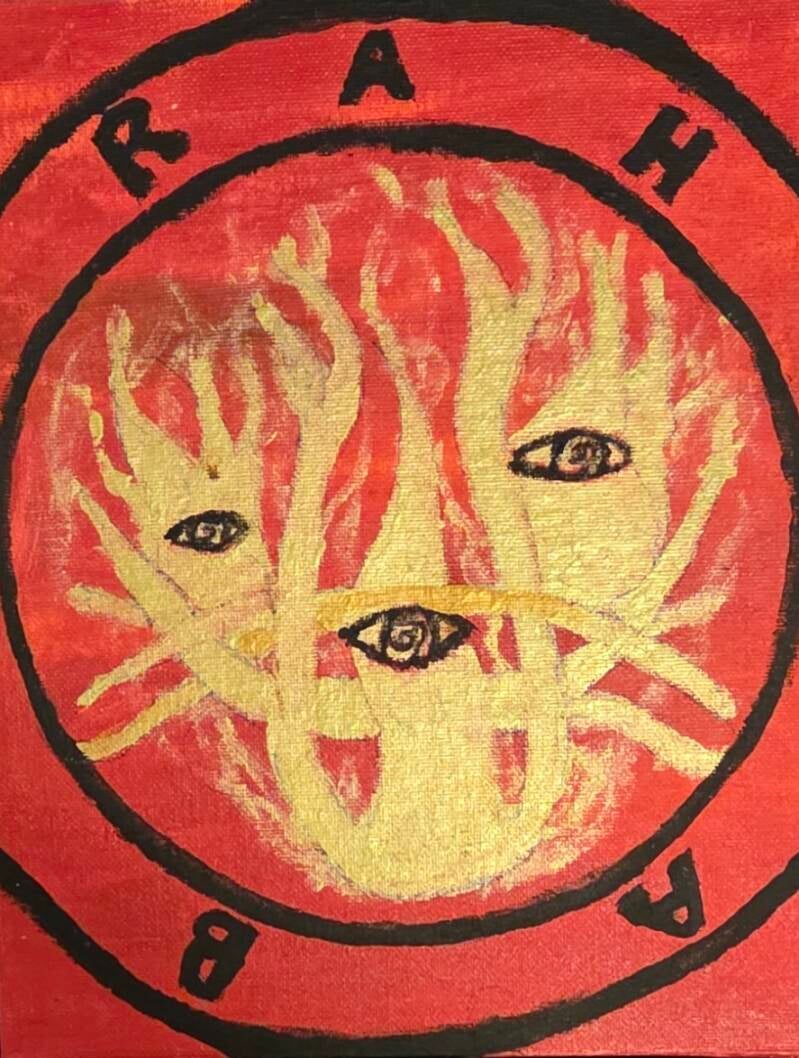
Background
In ancient Hebrew literature and later Jewish interpretation, Rahab (רַהַב) is not just a name—it's a powerful symbol. Often rendered as a sea-monster, dragon, or emblem of chaos, Rahab appears in several biblical texts and later folklore as a cosmic adversary subdued by divine power. The Hebrew word rahab is related to concepts like pride, tumult, and arrogance. It is distinct from the more familiar heroine Rahab of Jericho (Joshua 2), instead representing a primeval force associated with the sea and chaos. Scholars see Rahab as part of a broader Near Eastern mythological tradition in which a creator god battles a chaotic sea creature similar to the Babylonian Tiamat or the Canaanite Yamm. In Hebrew texts, this imagery emphasizes God’s victory over disorder and uncontrollable natural forces.
Rahab appears poetically in a few Old Testament passages. Job 9:13 / 26:12 – Rahab is mentioned as a powerful entity whose helpers submit to divine authority. Psalm 89:10 – God is described as crushing Rahab like one slain, reinforcing the theme of divine triumph over chaos. Isaiah 51:9–10 – The prophet recalls the slaying of Rahab in imagery that parallels divine control of the seas and deliverance of Israel. In these poetic contexts, the term sometimes functions literally a sea-monster and sometimes metaphorically chaos or opposition to God. Rahab’s mythic backdrop links him to ancient chaoskampf themes like cosmic struggle. Just as other near-east myths feature deities battling sea monsters to establish order, the Hebrew texts use Rahab to symbolize God’s mastery over the primeval waters and disorder.
Beyond the mythic sea monster image, Rahab is also used as a poetic title for Egypt in some biblical passages—especially in contexts where Egypt’s pride or oppression must be judged or humbled. This dual usage—monster and metaphor for a powerful enemy nation—reflects how ancient audiences might perceive both cosmic forces and earthly powers as manifestations of chaotic opposition to divine will. In later Jewish folklore and commentary in the Talmudic tradition, Rahab sometimes appears as a demon or ruler of the sea, akin to other sea monsters like Leviathan or Tannin, though distinct in certain texts.
Some interpretations describe Rahab as a dragon of the waters, attributing to him responsibility for the roaring sea and tempestuous waters—a mythic embodiment of chaotic natural forces.
Academic sources note that Rahab’s appearances are fragmentary and poetic rather than narrative. There’s no full, cohesive “story” in the biblical canon; instead, Rahab functions as a symbolic presence linking Israel’s God to cosmic sovereignty over hostile forces. Some scholars argue that Rahab and Leviathan may have been interchangeable or overlapping concepts in ancient poetic imagery, reflecting the fluidity of mythic traditions in the ancient Near East. Rahab stands at the crossroads of mythology, poetry, and theology—a dragon-like figure representing both chaotic primeval forces and human pride or oppression (such as Egypt). Whether viewed as a sea monster defeated by God at creation, a metaphor for arrogant nations, or a later demon figure in folklore, the myth of Rahab reveals how ancient cultures grappled with the power of the sea, the threat of chaos, and the sovereignty of the divine.
Rahab and Asmodeus Channel
Rahab: In a feminine voice, “my fire burns every aspect of self that does not serve your spirit by exploiting them. This can be included in passions and desires. I have not spoken to a soul like this in an age. My presence is only known to the Gods. My light and fire, my primordial force exploits and ignites the desires you hold dear, to refine them. Asmodeus ruler of the sphere of Golachab, tests your wisdom as well as exploiting your lust and desire for you to fulfill them."
Asmodeus: "my tests are to see if you deserve them. If yes, you pass, if not then you will suffer and burn in Rahab's flames."
Rahab: “My age is from the turning of time. I was formed in the belly of Tiamat. When she was split and became your home. I rose like up like a volcano and became the personification of the flaming serpent. Yet my true nature and primordial force is that of purification. I strip the soul of that which hold one back so that it can propel into its intentions. Golachab is the realm of fire and purification. It is also the realm of destruction. As Asmodeus is the ruler, he uses my fires in his exploitations. Shame and guilt from the actions of lust and desire fall into my world. Often these are actions the spirit did not want to make yet did and fell to the suffering of it. I am the ambers that wrap around and burn those aspects trapped in Golachab. The embers burn bright and hot. What burns is not destroyed but suffers and is broken?
My primordial force is of destruction, yet not to destroy even if you want it. Thus, the land of the burning ones. You will burn of pleasure or pain here depending on your choices. Asmodeus will tempt you with desire. If you use wisdom and pass you will burn with pleasure. If you fail, pain. For I am the primordial fire of this realm and coil around all who enter. As you look deeper at the amber flaking off, this is part of the suffering you are letting go to burn brighter and to ascend as the fiery dragon. My fires peel away at the self, like shedding skin. It is a dualistic nature that is for those only caught in its blaze. The term burning for your sins is from the sphere of Golachab. For it is the shame and guilt that feed the fires that never destroy but bring pain and pleasure.These tests of Asmodeus are to walk through the levels of suffering, walking upon the fire releasing the fear and shame through forgiveness of self and others that are tied. The light of the fires is in pursuits of connection to rebuild love. Weeding out the lust and desire, refining your walk upon the flames. Then the ambers and fire will let go of you. You will no longer burn yet dance upon the stars.
Rahab: In a masculine voice, "I am considered a fire worm, yet my fire is across the entire Qliphoth. The positive force of my nature is to exploit lust and desire in that aspect of passion. This also can be pleasure or pain. I was born from the lust of Tiamat, which is why I am governed by Asmodeus, son of Naamah, and King of Lust and Desire. The fires and levels of burning are equal to the realm of shame and guilt from societal sins. It is the spirits detached pieces that are chained here. By the chain of their spirits own making. Once the spirit overcomes this suffering through liberation or forgiveness, the chains will fall and release the piece of spirit. My primordial force is to burn and hold people to burning who wish it. Through this forgiveness of self, you gain back the lost aspects and regain its energy. It is here that begins the purification."
Rahab: In a feminine voice, "today I come to you in my feminine nature. As birthing of pleasures in the flames. I am the androgyne. Lilith gifted these fires, and burn an amber red. Although it gives pleasure, it breaks down the spirit. It is the destructive force of pleasure that humanity is tied in guilt and shame. They burn addicted to the pleasure, as it burns it needs to feed, yet it never goes out. This manifest in the physical addiction of pleasure and pain through Nahamoth, where one never finds fulfilment. When the spirit first experiences the traumatic event in Malkuth, the pieces tied to the shame of it are lost in Golachab to burn but not die.
Retrieving these pieces will settle the desires in Malkuth. This is how one can heal, from accepting the fire and releasing it. Many cross through here and get trapped in moments after they die. Here in Golachab, they are lost in different flames or sparks of memory that hold them burning. To retain your full consciousness after death is to be immortal and pass easily through the fires as you know why things happened. Therefore, there are groups that prepare in life for after death to pass through. Those that do harm to others also are here in Golachab as their aspects of spirit fall here. Therefore, those who kill often suffer in dreams, as they are fragmented and burn in my flames.
Asmodeus: Give into your desires for those you seek. You must share your true feelings to build a fire with someone. If they do not wish to build this fire, they will let you know. Be assertive on how you feel. When you are true to your heart and spirits desire, the fires of Golachab cannot touch you. That is the power of love which is outside of lust and desire.

Rahab Praxis
Purpose: The purpose of this rite is to invoke the fires of Rahab to gain his/her gnosis. Rahab's fire is one of Hecate's keys to the sphere of Golachab in the underworld/Qliphoth.
Tools:
Two black tealight/candle
Lancet to anoint the sigil
The Sigil of Hecate (Created by Asenath Mason) and The Sigil of Rahab. It is recommended to draw them on paper or paint them on canvas. Doing so allows your energy to flow into its creation.
Dagger-(Only used for creating the ritual container) Do not use your dagger in the invocations of any of the dragons. How you approach them is how they will approach you and with a dagger can create complications.
Journal
The Invocation
Day 1.
Ritual Prep:
Set up the sigils on an and alter/table facing west and a black tealight next to it. Take a salt shower/bath or ritual bath prior to the invocation. It prepares the mind, body, and spirit for the ritual.
Ritual:
Creating the ritualistic container: Starting in the west and ending in the west making, using a dagger, I would walk counterclockwise drawing the circle. As I walked, I said these words. “I cast this circle of Leviathan around, entwined and bound, above and below to protect the energies so.” Finish by drawing a flaming trident to seal the space.
Light the candle and anoint the sigil with your blood
Hecate Partial Invocation:
Great Queen of the Night
Keeper of the Keys
Torch Bearing Goddess
Lady of the Crossroads
Heaven, Earth, and Sea
Great Goddess Hecate
Open the gates to the underworld
To the realm of Aarab Zurcach
I partially invoke you from waist to crown
Guide me to the guardian of its gates
So I may learn of your key
to the fire of Tannin
Ho Dracon Ho Megas
En Nomine Draconis
Meditation: Focus on the sigil for a few minutes. When you have the sigil memorized, close your eyes. See the sigil rise out of the grown in gold and silver with flames wrapping around the edges. See the sigil morph and return to its shape and open. Begin chanting Vovin three times and then Hecate three times. Keep chanting until you feel the energy shift. Sit or lay down and see what comes to you. Write down any experiences in your journal.
Closing:
Call to Hekate/Hecate to guide you back home. See if she has any messages for you.
Once back, say: "It is done"
Leave the candle vigil in honor of Hecate
Cast the sigil of fiery trident in reverse to open the space.
Day 2.
Ritual Prep:
Set up the sigils on an and alter/table facing west and a black tealight next to it. Take a salt shower/bath or ritual bath prior to the invocation. It prepares the mind, body, and spirit for the ritual.
Ritual:
Creating the ritualistic container: Starting in the west and ending in the west making, using a dagger, I would walk counterclockwise drawing the circle. As I walked, I said these words. “I cast this circle of Leviathan around, entwined and bound, above and below to protect the energies so.” Finish by drawing a flaming trident to seal the space.
Light the candle and anoint the sigil with your blood
Invocation of Rahab:
Great Fire Serpent
Dragon of Flame
Exploiter of our passions and desires
Purifying Primordial Force of Fire
Your ambers burn and destroy
That which is released from forgiveness of guilt and shame
Your fires that burn of pleasure and pain
Until the soul can accept itself
I invoke thee
Enter my temple of flesh
Ignite your fires and gnosis within me
To heal myself and help others heal on their path
Honoring your teachings and wisdom
Ho Dracon Ho Megas
En Nomine Draconis
Meditation:
After you say the words, sit down. Focus on the sigil for a few minutes. When you have the sigil memorized, close your eyes. See the sigil rise out of the ground in gold and silver with flames wrapping around the edges. See the sigil morph and return to its shape and open. Begin chanting Vovin three times and then Rahab three times. Keep chanting until you feel the energies shift. If accepted Rahab will request you to sit with your left hand up and your right hand down. As you do, feel energy pouring into your body through your left hand and out your right. Turn you right hand up. With both hands facing upward, feel energy rising from both. The transference was complete. Allow any experience to unfold.
Inner Temple Meditation:
See before you a black door with a silver handle. You have seen this door before, it is to your temple door. Open the door and step in. The torch light flickers on the wall as you see your table, chair and mirror. In the center of the room you see your source flame burning bright. Walk toward it and take a log and place it on the flames. As you do this, the torches on the walls flare up and back down. Turn to the left corner of the room. You see stairs going down into the ground. Next to the stairs is a doorway to another room. Walk into the room. Small torches line the wall. Looking at them, each torch has a frame of a dragon. The light in the room is coming from a fire pit in the middle of the room, Leviathan's, Typhon's, Lotan’s, Tannin's, and Tiamat's torch. You see logs next to the fire. Take one and say the name Rahab and place it on the fire. This action causes one of the torches to ignite. If Rahab appears, allow the experience to unfold.
Come back here to care for the flame by adding logs to it. You will find the more you do, the more you sense your own energy as well as Rahab. Know from this day Rahab walks with you
Closing:
Call to Hekate/Hecate to guide you back home. See if she has any messages for you.
Once back, say: "It is done"
Leave the candle vigil in honor of Rahab
Cast the sigil of fiery trident in reverse to open the space.
References
- Jewish Encyclopedia: RAHAB — historical interpretation and mythological background.
-
LDS Sunday School summary: Rahab dragon — folkloric and demonological perspective.
-
Psalm and Isaiah contexts — specific biblical references to Rahab as sea creature metaphor.
-
Rahab (mythology) — overview of biblical usage and meaning.